Source Power Brake Booster for GM Ford Isuzu Trucks
Find 30 power brake booster options for GM, Ford, Isuzu, and Hino vehicles. Compare specifications, certifications, and prices from verified Chinese manufacturers offering customization and OEM services.
Key considerations
Products List






Comprehensive Sourcing Guide
Strategic Sourcing Guide for Power Brake Boosters
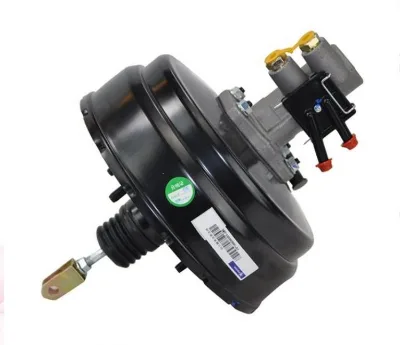
The global automotive aftermarket and original equipment manufacturing sectors rely heavily on the reliability of power brake boosters, which serve as the critical interface between the driver's pedal input and the hydraulic braking system. For procurement professionals, sourcing these components requires a nuanced understanding of technical specifications, supply chain logistics, and compliance frameworks. The current market presents a diverse array of options, ranging from neutral-packaged units to those with specific OEM branding, catering to various vehicle makes and models. This guide outlines the essential factors for evaluating power brake booster suppliers, ensuring that procurement decisions are grounded in verifiable data and industry best practices.
Technical Specifications and Component Variations
Understanding the technical diversity of power brake boosters is the first step in effective sourcing. The market offers units with distinct classifications, including drum brake systems and disc brake configurations. Buyers must distinguish between single-diaphragm and dual-diaphragm designs, as the latter, often referred to as 8-inch dual boosters, provide enhanced braking force for heavier vehicles or those requiring higher performance. The material composition is another critical variable; while some units are constructed from iron, others utilize steel for improved durability and weight reduction. Surface treatments such as zinc plating, electrophoresis, and chrome coating are frequently applied to protect against corrosion, particularly in vehicles operating in diverse climatic conditions.
Dimensions and physical specifications vary significantly based on the intended application. Standard sizes are common, but custom dimensions may be required for specific vehicle models. For instance, certain units are designed for specific truck applications, such as the 90mm power brake clutch booster, while others are tailored for passenger vehicles like the Lifan 530. The physical packaging standards also reflect these variations, with some products shipped in neutral paper packages, while others require inner boxes, cartons, and pallets to ensure safe transport. Buyers should verify the exact dimensions and weight specifications, as these impact shipping costs and storage requirements. The presence of customization options allows suppliers to tailor products to specific OEM requirements, including the provision of OEM services and the ability to match specific part numbers.
Compliance, Certification, and Quality Standards
In the automotive industry, compliance with international standards is non-negotiable. Most reputable suppliers in the sector hold ISO certifications, which serve as a baseline indicator of quality management systems. However, buyers must verify the specific nature of these certifications, as they may relate to production processes rather than the product itself. The supply chain often involves products originating from specific manufacturing hubs in China, such as Taizhou, Henan, and Guangzhou, where production capabilities are concentrated. While the origin location is a key logistical factor, it is the adherence to quality standards that ensures product integrity.
The certification landscape also includes specific product classifications, such as those for wheel cylinders and disc brake systems, which may be relevant when sourcing related components. Buyers should not assume that all listed products meet every certification standard; rather, they must request documentation for each specific SKU. The "Neutral Package" and "Neutral Paper Package" attributes observed in the market suggest a trend toward unbranded or generic packaging, which is common in the after-market sector. This approach allows for flexibility in branding but requires rigorous quality control to ensure that the lack of a brand name does not compromise the component's reliability. Verification of these certifications should be a prerequisite before finalizing any procurement contract.
Cost Drivers and Pricing Dynamics
The pricing structure for power brake boosters is influenced by a complex interplay of factors, including material costs, manufacturing complexity, and customization requirements. The observed price range in the market spans from $0.10 to $280 USD, reflecting the vast difference between basic components and specialized, high-performance units. Several variables drive these costs. The material used, whether iron or steel, directly impacts the base price. Similarly, the complexity of the surface treatment, such as the combination of zinc, electrophoresis, and chrome, adds to the manufacturing expense.
Customization is another significant cost driver. Products that offer "Customization: Available" or "Customized: Yes" often command higher prices due to the additional engineering and tooling required. The packaging also plays a role; units requiring complex packaging solutions like "Inner Box and Carton, Pallet" incur higher logistics costs compared to those in simple "Neutral Paper Package" configurations. Furthermore, the Minimum Order Quantity (MOQ) affects the unit price. The market shows an MOQ range from 1 to 300 units, with lower MOQs typically resulting in higher per-unit costs. Buyers should analyze their volume requirements against these price tiers to optimize their procurement strategy. Payment terms, such as Western Union or TT, also influence the financial dynamics of the transaction, with different suppliers offering varying terms based on the order size and relationship history.
Typical Applications and Market Segmentation
Power brake boosters are utilized across a wide spectrum of vehicle types, from light passenger cars to heavy-duty trucks. The market segmentation is equally diverse, with products targeting specific regions such as South America, North America, Eastern Europe, Western Europe, and various parts of Asia and Africa. The "Main Market" data indicates a global reach, with suppliers catering to both domestic and international demand. Specific applications include vehicles from major manufacturers like GM and Ford, as well as truck brands such as Isuzu and Hino.
The "Market Type" is predominantly the after-market, where replacement parts are in high demand. However, the availability of OEM services suggests that these components also serve the original equipment manufacturing sector. Buyers must match the product specifications to the vehicle model precisely. For example, a booster designed for a Lifan 530 will not be compatible with a GM vehicle without significant modification. The reference numbers and OE numbers provided by suppliers, such as 642-09102 or 47960-60050, are critical for ensuring compatibility. Procurement teams should maintain a detailed database of these part numbers to streamline the sourcing process and avoid errors in component selection.
Supplier Evaluation and Selection Criteria
Selecting the right supplier requires a multi-faceted evaluation process that goes beyond price comparison. Buyers should assess the supplier's production capabilities, including their ability to offer customization and their adherence to quality standards. The presence of ISO certification is a positive indicator, but it should be verified against the specific product line. The origin of the product, whether from Taizhou, Henan, or Guangzhou, can provide insights into the supplier's logistical capabilities and regional expertise.
The supplier's ability to provide samples is another crucial factor. The "Sample: Can Offer" attribute indicates a willingness to test the product before bulk ordering, which is a best practice in B2B procurement. Additionally, the warranty terms, such as the 6-month warranty observed in some listings, reflect the supplier's confidence in their product quality. Buyers should also evaluate the supplier's flexibility regarding packaging and delivery. The ability to support customized packaging and provide standard delivery times of 3-5 working days is essential for maintaining supply chain efficiency. Finally, the supplier's responsiveness to payment terms and their willingness to provide OEM services should be considered as part of the overall value proposition.
Quality Control and Long-Term Procurement Strategy
Ensuring consistent quality is paramount in the procurement of power brake boosters. Buyers should implement a robust quality control protocol that includes pre-shipment inspections and post-delivery testing. The "Condition: New" attribute is a basic requirement, but it must be backed by physical verification. The "Weight: Standard" and "Size: Standard" specifications should be confirmed against the actual received goods to ensure they meet the agreed-upon standards.
For long-term procurement, building a strategic relationship with suppliers is more beneficial than transactional purchasing. This involves negotiating favorable terms for volume orders, securing consistent supply chains, and establishing clear communication channels for technical support. The "OEM Services Provided" attribute suggests that suppliers are capable of supporting long-term partnerships with original equipment manufacturers. Buyers should also consider the lead times and delivery reliability, as delays can disrupt production schedules. The "Delivery Time: 3-5 Working Days" is a benchmark that should be monitored to ensure consistency. By focusing on these long-term considerations, buyers can mitigate risks and ensure a steady supply of high-quality power brake boosters for their operations.
Conclusion
Sourcing power brake boosters requires a comprehensive approach that balances technical specifications, compliance requirements, and cost considerations. By leveraging the available data on certifications, materials, and market applications, procurement professionals can make informed decisions that align with their operational needs. The diversity of the market, from neutral-packaged units to customized OEM solutions, offers ample opportunities for strategic sourcing. However, the key to success lies in rigorous supplier evaluation, strict quality control, and the establishment of long-term partnerships. As the automotive industry continues to evolve, staying informed about the latest trends and standards will be essential for maintaining a competitive edge in the procurement of critical braking components.
FAQs
What certifications do power brake booster suppliers hold?
Most suppliers hold ISO certification as a baseline for quality management. This certification indicates adherence to production process standards but does not guarantee every product meets specific performance claims without verification.
Which materials are used for power brake boosters?
Products are commonly constructed from iron or steel to ensure durability. Steel units often offer weight reduction, while iron provides robustness, with surface treatments like zinc or chrome applied for corrosion protection.
Can suppliers offer customization for power brake boosters?
Yes, many suppliers provide customization options including OEM services and specific packaging. Buyers can request tailored dimensions or branding, though this may affect the unit price and minimum order quantity requirements.
What is the typical lead time for power brake booster delivery?
Standard delivery times range from 3 to 5 working days for many suppliers. This timeline applies to standard orders, but complex customization or large volume requirements may extend the production and shipping schedule.
How does the MOQ affect power brake booster pricing?
The minimum order quantity ranges from 1 to 300 units depending on the supplier. Lower MOQs often result in higher per-unit costs, while larger orders typically benefit from reduced pricing tiers and better logistics efficiency.
Where are power brake booster manufacturers located?
Manufacturing hubs are concentrated in Chinese regions such as Taizhou, Henan, and Guangzhou. These locations offer established supply chains, though buyers should verify specific factory origins to ensure logistical compatibility with their needs.